

When a construction project breaks ground, everyone focuses on the visible milestones—the rising steel, the architectural facade, the finished roofline. Yet, the most perilous phase of any development happens entirely out of sight. Beneath the topsoil lies a complex, highly variable underground world of rock, clay, sand, and groundwater.
Before a heavy-duty excavating contractor swings a single bucket or fires up a bulldozer, geotechnical engineering and soil testing serve as the ultimate insurance policy for the entire build.
Why Visual Inspection Isn’t Enough
An experienced earthmover can look at a site and tell you if the soil feels damp or if it is full of organic debris. However, human intuition cannot measure shear strength, moisture content, bearing capacity, or the presence of underground voids.
- Unstable Subgrades: Soil that looks solid on the surface may hide layers of compressible clay or loose fill dirt underneath. Without proper compaction testing, a heavy foundation can experience differential settlement, leading to cracked concrete and structural failure months down the road.
- The Groundwater Hazard: Unanticipated perched water tables or high saturation levels can turn a routine foundation excavation into a muddy, unstable quagmire. Geotechnical borings identify water table elevations early, allowing engineers to design effective dewatering systems before excavation begins.
The Dynamic Between Geotech and the Earthmover
A comprehensive geotechnical report is not just a regulatory hurdle to clear for building permits; it is the core blueprint used by your excavating contractor to map out equipment needs and soil management strategies.
Balancing the Site: Geotechnical data tells the contractor whether excavated native soil can be reused as structural fill or if it must be hauled off-site and replaced with imported granular material. Knowing this ratio upfront eliminates massive budget overruns.
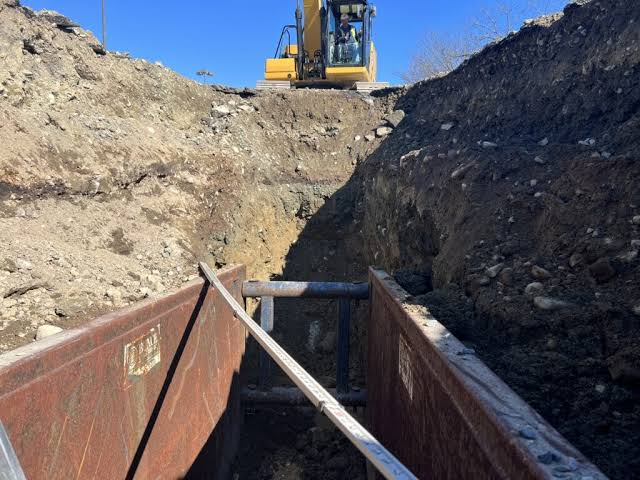
When the excavation team and the geotechnical engineers collaborate closely, they can anticipate underground obstacles—such as expansive soils or rock ledges—and select the appropriate heavy machinery, trench shields, and stabilization agents before hitting a roadblock.
Conclusion: De-Risking the Deep Work
Investing in thorough subsurface investigation before putting equipment in the dirt transforms a guessing game into an engineered science. By bridging geotechnical insights with expert earthmoving execution, project developers protect their timelines, safeguard worker safety, and ensure their structures stand on an unshakeable foundation.