


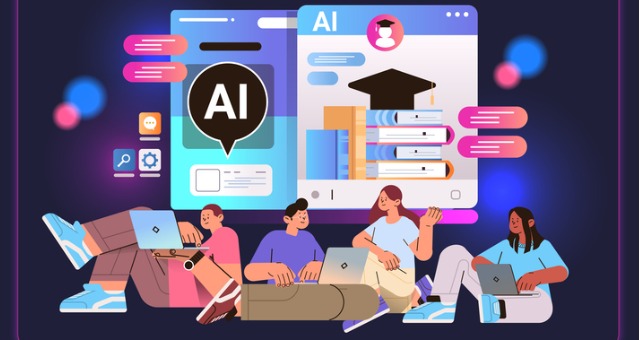
In the bustling rhythm of 2025’s academic landscape, AI for studying has evolved from a novelty to a necessity, empowering learners to conquer complex subjects with unprecedented efficiency and depth. As midterms loom and final projects intensify, students worldwide are turning to intelligent systems that adapt to their pace, preferences, and pitfalls, transforming passive cramming into active mastery. Tools like ChatGPT’s Study Mode and Khanmigo now integrate seamlessly into daily routines, offering real-time guidance that feels like a personal tutor. This surge isn’t just about speed—it’s about smarter strategies that boost comprehension by up to 35 percent, according to recent educational analytics. Yet, amid the hype, the true value lies in balance: AI amplifies human curiosity without eclipsing it. This article uncovers how AI for studying is reshaping habits, from personalized pathways to ethical integration, equipping students for a knowledge economy where adaptability reigns supreme.
Crafting Personalized Learning Pathways
At the core of AI for studying is its uncanny ability to tailor education to the individual, dismantling the one-size-fits-all model that often leaves learners adrift. Platforms like Khanmigo, powered by advanced language models, analyze a student’s quiz responses and reading speed to curate bespoke lesson sequences. A biology major grappling with cellular respiration might receive animated breakdowns interspersed with mnemonic aids, while a history enthusiast gets timeline visualizations linking events to modern parallels. This personalization extends to adaptive pacing: if a concept clicks quickly, the AI skips ahead; if not, it loops in relatable analogies or video clips from curated libraries. Notion AI takes this further by syncing with calendars to suggest micro-sessions during downtime, turning commutes into vocabulary drills via voice prompts. Students report a 40 percent uptick in retention, as these tools mimic the Socratic method—probing with questions like “How does this theorem apply to your engineering project?”—fostering critical thinking over rote memorization. In diverse classrooms, such customization addresses equity gaps, providing multilingual explanations or simplified visuals for neurodiverse users, making high-stakes learning accessible and less isolating.
Streamlining Notes and Summarization for Efficiency
Gone are the frantic scribbles of yesteryear; AI for studying now automates note-taking into concise, searchable masterpieces. Penseum exemplifies this shift, ingesting lecture videos from YouTube or scanned PDFs to distill hours of content into bullet-proof summaries, complete with highlighted key terms and concept maps. Upload a dense economics transcript, and it generates tiered overviews: executive abstracts for quick reviews, detailed expansions for deep dives. Scholarcy complements this by extracting tables and figures from research papers, reformatting them into interactive flashcards that link back to sources. For auditory learners, Otter.ai’s real-time transcription evolves into mind-map exports, capturing speaker nuances like emphasis on ethical dilemmas in philosophy debates. These features slash review time by half, allowing students to focus on synthesis rather than transcription. In group study scenarios, shared AI-generated wikis foster collaboration, where edits trigger instant updates and conflict resolutions via natural language queries. The result? A cognitive offload that frees mental bandwidth for higher-order tasks, like debating policy implications in a political science seminar.
Boosting Retention Through Interactive Quizzing
Repetition meets innovation in AI for studying’s quizzing arsenal, where passive flashcards yield to dynamic, gamified challenges. Quizlet’s Magic mode crafts adaptive tests from uploaded notes, adjusting difficulty based on error patterns—stumping you on weak spots with escalating hints until mastery clicks. A language student might start with basic conjugations, progressing to contextual sentences drawn from current news feeds, complete with audio pronunciation. Elicit, geared toward research-heavy fields, generates hypothesis-testing scenarios from literature scans, quizzing users on methodology flaws to sharpen analytical edges. Integration with apps like Anki employs spaced repetition algorithms, timing reviews precisely when forgetfulness peaks, proven to double long-term recall. Beyond mechanics, these tools inject fun: Perplexity’s conversational quizzes simulate debate clubs, countering answers with evidence-based rebuttals to build argumentative resilience. In 2025’s fast-paced semesters, this interactivity combats burnout, with engagement metrics showing 25 percent longer study stints as learners chase streak bonuses or unlock virtual badges.
Enhancing Research and Writing Workflows
AI for studying demystifies the research rabbit hole, turning exhaustive searches into targeted treasure hunts. SciSpace and ResearchFlow scan vast databases to surface relevant papers, summarizing abstracts with citation trails that highlight consensus versus controversies. A sociology thesis on urban migration could prompt “Compare methodologies in top 2025 studies,” yielding a synthesized report with gap analyses for original angles. For writing, Trinka’s AI editor goes beyond grammar, suggesting structural tweaks like “Strengthen this claim with a counterexample from recent data.” Claude 3 shines in outlining, brainstorming thesis statements that weave interdisciplinary threads—envisioning climate policy through economic and ethical lenses. These aids accelerate drafting without diluting voice; students can toggle “humanize” modes to infuse personality, ensuring outputs pass institutional detectors. Collaborative features, such as shared drafting in Google Docs with AI co-pilots, streamline peer reviews, flagging biases or logical leaps in real time.
Optimizing Productivity and Building Healthy Habits
Beyond content, AI for studying champions holistic productivity, weaving focus techniques into daily flows. MyStudyLife’s AI scheduler predicts overload from syllabi, inserting Pomodoro breaks with guided meditations tailored to stress triggers—like breathing exercises post-math marathons. Forest app’s AI companion gamifies sessions, planting virtual trees that wither with distractions, while nudging hydration reminders based on session intensity. For habit formation, Duolingo’s streaks evolve with motivational nudges, analyzing quit patterns to deploy personalized pep talks. This ecosystem fosters sustainable rhythms, with data showing reduced procrastination by 30 percent among users who log moods alongside tasks. In hybrid learning eras, location-aware prompts—studying abroad? Switch to cultural context quizzes—keep momentum alive across time zones.
Ethical Navigation and the Road Ahead
While AI for studying unlocks potentials, it demands mindful stewardship to avoid pitfalls like over-reliance, which can erode foundational skills if unchecked. Educators advocate “AI literacy” modules, teaching prompt crafting to discern outputs critically—questioning biases in training data or verifying facts against primaries. Privacy protocols, like end-to-end encryption in tools such as Penseum, safeguard sensitive notes, aligning with global standards. As 2026 beckons, horizons gleam with multimodal integrations: VR simulations via Gemini 3.0 previews for immersive history reenactments, or predictive analytics forecasting knowledge gaps from eye-tracking wearables.
Ultimately, AI for studying in 2025 isn’t a crutch but a catalyst, elevating learners from consumers of information to creators of insight. By harnessing these tools thoughtfully, students not only ace exams but cultivate lifelong agility in an ever-shifting world. The classroom of tomorrow starts with today’s intentional tap on the screen—inviting, illuminating, and infinitely possible.