


In the rapidly evolving landscape of 2025, where artificial intelligence workloads routinely push rack power beyond 120 kW and edge computing requires instant deployment, the precision air conditioning unit has transformed into a highly intelligent, modular system that delivers pinpoint environmental control while achieving energy efficiency levels previously thought impossible.
Defining the Modern Precision Air Conditioning Unit
A precision air conditioning unit is a specialized climate control system created exclusively for technology-intensive spaces that demand absolute stability. These environments range from hyperscale data centers and colocation facilities to telecommunications hubs, medical imaging centers, and industrial automation rooms. Unlike comfort cooling designed around human sensation with broad temperature bands, precision units maintain supply air temperature within plus or minus 0.5 degrees Celsius and relative humidity within three percent of setpoint, twenty-four hours a day, every day of the year. This extraordinary accuracy is achieved through continuous operation, advanced variable-capacity refrigeration circuits, and sophisticated microprocessor controls that sample conditions hundreds of times per minute. The primary focus remains sensible heat removal at ratios typically exceeding 0.98, perfectly matching the dry heat signature of electronic equipment while providing exact humidity management through dedicated humidifiers and precision dehumidification processes.
The Evolution Toward Close-Coupled Architecture
Early precision cooling relied on large perimeter units that distributed cold air across entire rooms through raised floors or overhead ducting. While adequate for the five to eight kilowatt racks of the early two thousands, this approach became increasingly inefficient as power density soared. The precision air conditioning unit of today has largely migrated to close-coupled designs that place cooling capacity mere centimeters from the heat source. In-row, in-rack, and rear-door configurations now dominate new installations, reducing fan energy requirements by up to seventy percent and enabling reliable cooling of racks that generate heat loads once considered impossible with air alone. This architectural shift, combined with hot-aisle/cold-aisle containment, has become the industry standard for achieving power usage effectiveness values below 1.2 in real-world operation.
In-Row Cooling: Precision Perfected
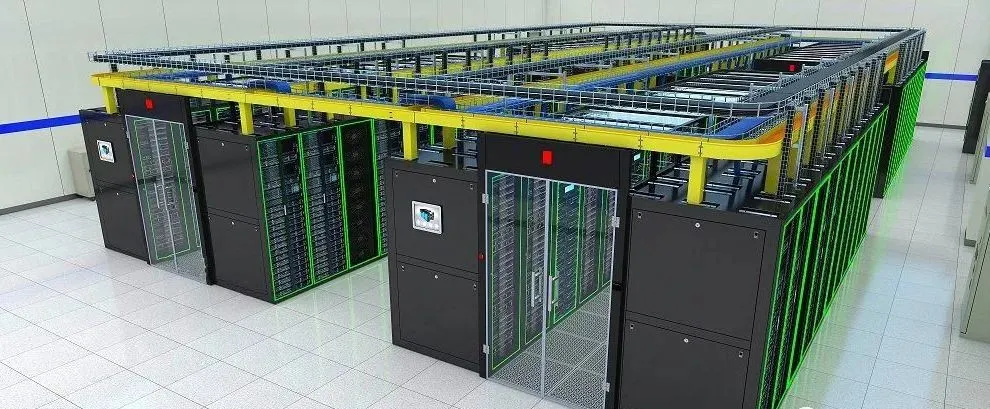
The in-row precision air conditioning unit represents the most advanced expression of close-coupled cooling. Installed directly between server cabinets, these units occupy the same width as a standard rack while delivering twenty to one hundred ten kilowatts of cooling capacity each. Horizontal airflow draws hot exhaust from the contained hot aisle, cools it instantly through high-surface-area coils, and discharges cold air directly into the cold aisle facing server intakes. This creates a short, efficient air path that eliminates mixing and hotspots completely. Modern in-row units feature inverter-driven scroll compressors that modulate capacity from fifteen to one hundred percent in seconds, brushless DC fans with aerodynamic impellers for silent operation, and integrated steam or ultrasonic humidifiers that maintain exact moisture levels without energy-wasting electric reheat in most conditions.
Engineering Excellence in Every Component
Every aspect of the precision air conditioning unit reflects decades of specialized development. Electronically commutated plug fans adjust speed continuously to match actual airflow requirements, reducing power consumption by up to seventy-five percent at part load compared to older belt-driven designs. Electronic expansion valves provide micro-precise refrigerant flow control, maintaining optimal superheat and subcooling across the entire operating range. Dual independent refrigerant circuits allow continued operation at fifty percent capacity if one circuit fails, while automatic rotation between circuits equalizes wear. Many units incorporate pumped refrigerant technology that eliminates water from the white space entirely, using low-pressure R134a or R513A in closed loops that require no floor drains, leak detection, or raised floor modifications.
Configuration Options for Every Scenario
The precision air conditioning unit is available in configurations that address virtually any installation challenge. Traditional downflow units continue to serve legacy raised-floor environments, while upflow and horizontal-flow models accommodate slab floors and overhead distribution. Rear-door heat exchangers provide active cooling without consuming additional floor space, ideal for retrofits and ultra-dense deployments. Overhead precision units offer flexible installation in facilities without raised floors. For extreme density AI clusters, hybrid systems combine in-row air cooling with direct-to-chip liquid loops, where the precision unit maintains overall room environmental control while liquid handles the most intense chip-level hotspots. Containerized and modular data center solutions increasingly ship with factory-integrated precision units, enabling deployment in weeks rather than months.
Energy Efficiency Redefined
Despite continuous operation, the latest precision air conditioning units achieve remarkable efficiency through multiple complementary strategies. Variable everything ensures power consumption tracks actual cooling demand with extraordinary precision. Air-side economizers with motorized dampers introduce filtered outdoor air whenever conditions permit, often providing thousands of hours of completely free cooling annually. Adiabatic assist systems pre-cool incoming air through controlled evaporation, reducing compressor workload by twenty-five to thirty-five percent in hot climates. Heat recovery options capture waste energy for building heating or domestic hot water generation. When deployed with proper containment and airflow management, these features routinely deliver partial power usage effectiveness values of 1.1 or lower, meaning only ten percent energy overhead beyond the theoretical minimum required to run the IT equipment itself.
Intelligence Built In
The precision air conditioning unit of 2025 operates as an intelligent platform rather than a simple mechanical device. Large color touchscreens provide intuitive local control, while full network connectivity enables integration with building management and data center infrastructure management systems. Machine learning algorithms establish normal operating signatures and detect the earliest signs of component degradation weeks before failure occurs. Some units now communicate directly with server baseboard management controllers, receiving advance notice of impending workload increases and pre-cooling the environment before heat arrives. Cloud-based analytics platforms aggregate data from thousands of deployed units to continuously improve performance algorithms and predict maintenance needs with increasing accuracy.
Scalability and Installation Advantages
One of the greatest strengths of modern precision air conditioning units is their inherent scalability. New units can be added individually as IT load grows, eliminating the massive upfront over-provisioning common with traditional designs. Quick-connect refrigerant lines and power connections allow installation in hours rather than days. Top or bottom piping options accommodate any facility layout. The modular approach perfectly supports pay-as-you-grow business models, aligning capital expenditure precisely with revenue generation while maintaining full N+1 or higher redundancy throughout the growth process.
Simplified Maintenance for Maximum Availability
Maintenance has been engineered for minimal disruption. Front-access design allows all serviceable components to be reached without moving the unit or affecting adjacent equipment. Filters slide out tool-free, coils feature hinged access panels for easy cleaning, and major components support hot-swap replacement. Comprehensive self-diagnostics monitor hundreds of operating parameters continuously, providing clear fault identification and parts lists when service is required. Many manufacturers now offer augmented reality support that overlays digital schematics and procedures onto the actual unit through a technician’s mobile device.
The Future Is Already Here
From late 2025 onward, the precision air conditioning unit continues its rapid evolution. Full integration with immersion and single-phase liquid cooling creates seamless hybrid environments. Edge computing drives development of ultra-compact units with integrated power distribution and networking in self-contained pods. Artificial intelligence moves toward fully autonomous cooling optimization, making real-time decisions about supply temperature, airflow patterns, and even temporary workload migration based on cooling availability. For organizations evaluating different manufacturers or seeking regional alternatives, exploring precision air conditioning unit link alternatif frequently reveals innovative solutions and competitive offerings worthy of consideration.
In conclusion, the precision air conditioning unit has evolved from a necessary utility into a sophisticated, intelligent system that actively enables the most demanding computing workloads of our time. As heat densities continue their relentless increase, these remarkable machines remain the essential foundation that keeps the digital world cool, reliable, and sustainable.