


Engineering Excitement: How to Create, Modify, and Master the Art of Drift Kart Performance
The motorsport world constantly evolves, seeking new ways to challenge drivers and entertain spectators. Among these innovations, the drift kart has emerged as one of the most accessible yet thrilling forms of racing entertainment. This specialized vehicle combines the fundamental principles of go-kart racing with the spectacular sliding techniques borrowed from professional drifting, creating a unique driving experience that emphasizes style over speed.
Understanding what makes a drift kart fundamentally different begins with examining its core design philosophy. Traditional go-karts prioritize grip and cornering efficiency, designed to carry maximum speed through turns while maintaining complete traction. The drift kart deliberately abandons this approach, instead embracing controlled loss of traction as its primary method of cornering. This fundamental shift in design thinking affects every component of the vehicle, from the chassis geometry to the tire compounds used.
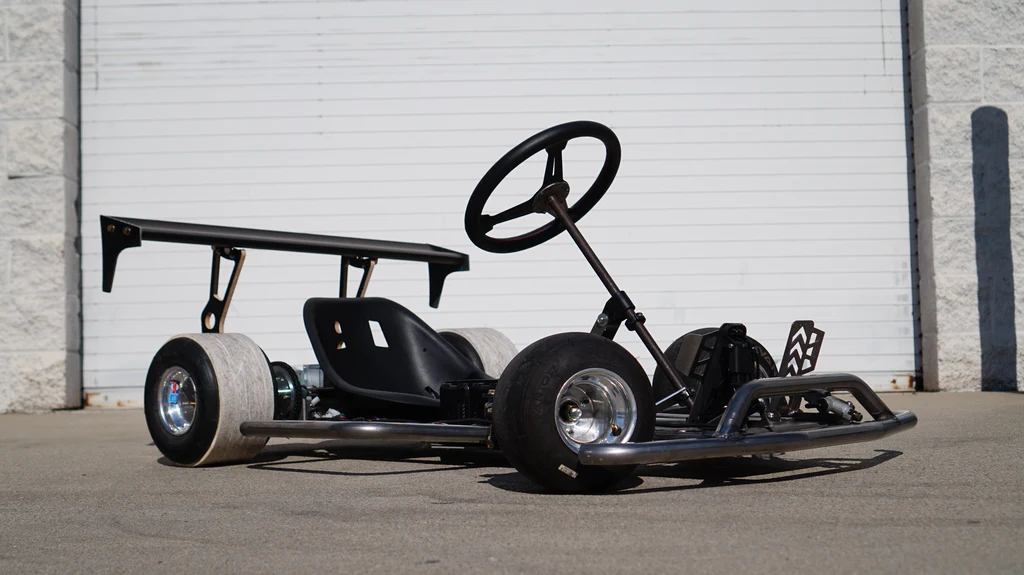
The heart of any successful drift kart lies in its chassis construction. Unlike standard racing karts that often use minimal tubular frameworks, drift karts require more substantial structures capable of handling the unique stresses created by sideways motion. The ideal drift kart chassis features a longer wheelbase than conventional designs, typically extending 6-12 inches beyond standard measurements. This extended length provides crucial stability during slides, preventing the rapid snap-back that can occur with shorter platforms.
Frame materials vary significantly among drift kart builders, with each offering distinct advantages. Steel tubing remains the most popular choice due to its excellent strength-to-weight ratio and ease of modification. Advanced builders sometimes incorporate chromoly steel for critical stress points, while budget-conscious enthusiasts often utilize mild steel throughout. The key lies in creating a structure that resists twisting under load while remaining light enough to respond quickly to driver inputs.
Suspension systems in drift kart applications serve multiple purposes beyond simple wheel location. The suspension must manage weight transfer during aggressive maneuvers while providing adjustability for different track conditions and driver preferences. Most successful drift kart setups utilize independent front suspension with adjustable shock absorbers and coil-over units. The rear suspension often employs a solid axle configuration that promotes predictable sliding characteristics while maintaining durability under stress.
The tire selection process represents perhaps the most critical decision in drift kart setup. Rear tires typically utilize specialized compounds designed to break traction easily while providing predictable sliding characteristics. Many builders experiment with different materials, from hard plastic compounds to specially formulated rubber mixtures. The front tires maintain higher grip levels to ensure steering control, creating the essential grip differential that enables controlled sliding.
Engine selection for drift kart applications requires balancing power output with controllability. Small-displacement four-stroke engines in the 150-300cc range provide excellent starting points for beginners, offering sufficient power to initiate slides without overwhelming novice drivers. These engines typically produce 8-15 horsepower, enough to maintain momentum through extended slide sequences while remaining manageable for learning fundamental techniques.
More experienced drift kart enthusiasts often graduate to larger powerplants or alternative propulsion systems. Two-stroke engines offer higher power-to-weight ratios but require more sophisticated tuning and maintenance. Electric motors have gained popularity recently, providing instant torque delivery that can be particularly effective for initiating slides. The immediate response characteristics of electric powertrains allow for precise throttle modulation that enhances the overall drifting experience.
The driving techniques required for successful drift kart operation demand a complete departure from traditional racing approaches. Instead of maintaining traction through corners, drivers must learn to deliberately break traction while maintaining control and momentum. The process begins with proper corner entry, where drivers use a combination of steering input and throttle reduction to shift weight forward and initiate rear-wheel sliding.
Once the slide begins, the real skill development starts. Maintaining an optimal drift angle requires constant adjustment of steering input and throttle position. Too aggressive with either control and the kart will either straighten out of the slide or spin completely. The sweet spot exists in a narrow band where the kart maintains forward momentum while presenting maximum visual drama through its sideways attitude.
Counter-steering techniques in drift kart operation differ from those used in full-size vehicles due to the reduced mass and shorter wheelbase. Steering corrections must be quicker and more precise, as the lighter weight of the kart means less momentum to work with during slides. Successful drift kart drivers develop an intuitive feel for these corrections, making subtle adjustments almost subconsciously as they navigate through corner sequences.
Track design plays a crucial role in drift kart enjoyment and safety. The ideal drift kart circuit features wide corners with generous run-off areas, allowing drivers to explore the limits of their vehicles without severe consequences for mistakes. Surface preparation is equally important, with many tracks utilizing specialized treatments to provide consistent sliding characteristics regardless of weather conditions.
The competitive scene surrounding drift kart racing has developed its own unique culture and judging criteria. Unlike traditional racing where lap times determine winners, drift kart competitions focus on style, angle, and execution. Judges evaluate runs based on entry speed, drift angle maintained through corners, line consistency, and overall presentation. This subjective scoring system adds an artistic element to the competition that appeals to both participants and spectators.
Building a competitive drift kart requires attention to numerous details beyond basic construction. Weight distribution affects how the kart initiates and maintains slides, with most successful setups featuring a slight rear bias to promote easier slide initiation. Aerodynamic considerations, while less critical than in high-speed applications, can still influence stability at higher speeds and during aggressive maneuvers.
Maintenance requirements for drift karts differ from standard racing applications due to the unique stresses imposed by sideways operation. Tire wear patterns follow different patterns, with rear tires experiencing rapid degradation from constant sliding. Regular inspection of suspension components becomes critical, as the lateral forces generated during drifting can accelerate wear on bushings, bearings, and joints.
Safety equipment for drift kart operation must address the unique risks associated with sideways motion. Standard racing helmets and protective clothing remain essential, but additional consideration should be given to equipment that protects against lateral impacts. Roll bars become more important due to the increased likelihood of rollover during aggressive slides or when transitioning between different surface conditions.
The future of drift kart racing appears bright, with growing interest from both participants and equipment manufacturers. Technological advances in electric powertrains offer new possibilities for performance and adjustability, while improved materials allow for lighter, stronger chassis construction. The sport’s accessibility continues to attract newcomers seeking an affordable entry point into motorsport, while providing experienced drivers with a platform for developing advanced car control skills that translate to higher levels of competition.
The drift kart represents the democratization of an advanced driving technique, making the thrill of controlled sliding accessible to enthusiasts regardless of budget or experience level. This unique vehicle continues to evolve as builders experiment with new approaches to chassis design, powerplant selection, and setup optimization, ensuring that the sport will continue growing and developing for years to come.